Noticing mucus in your stool can be surprising or uncomfortable, especially if it happens repeatedly. You might see clear, white, yellowish, or jelly-like material on your toilet paper or mixed with your bowel movement. While a small amount of mucus in feces is usually normal, a noticeable increase can sometimes indicate digestive irritation, an infection, or an underlying gastrointestinal condition.
Understanding the possible causes can help you decide whether to monitor your symptoms, make simple dietary changes, or seek medical care.
Quick Answer: Why Does My Feces Have Mucus?
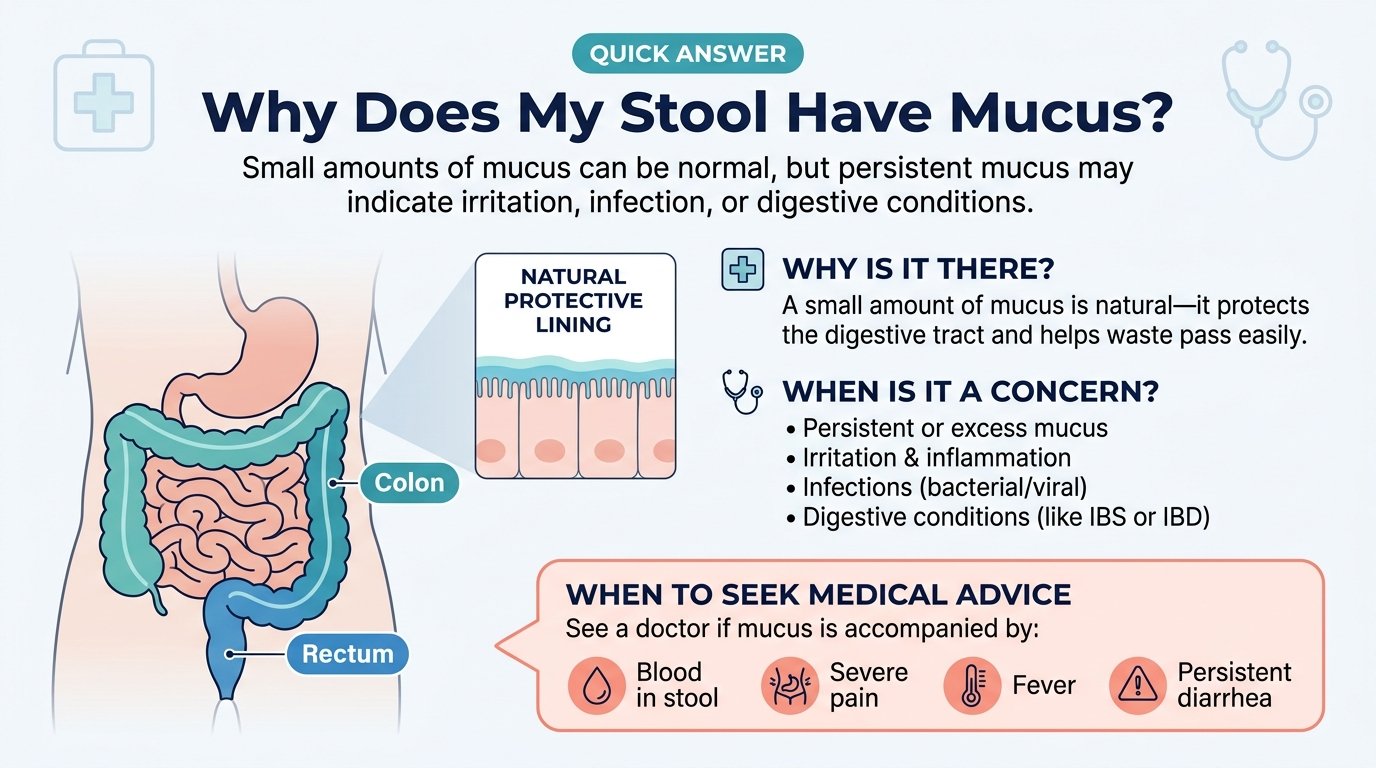
Your feces may contain mucus because your intestines naturally produce this slippery substance to lubricate the digestive tract and help stool pass smoothly. Small amounts of clear mucus are generally normal.
However, excess mucus in stool may be associated with constipation, diarrhea, irritable bowel syndrome (IBS), intestinal infections, hemorrhoids, or inflammatory bowel disease (IBD). The cause depends on the amount of mucus, its appearance, how long it lasts, and whether you have other symptoms.
Contact a healthcare professional if mucus persists, keeps returning, or occurs with abdominal pain, blood in your stool, fever, or unexplained weight loss. Severe abdominal pain, substantial rectal bleeding, fainting, or signs of severe dehydration require urgent medical attention.
What Is Mucus in Stool?
Mucus is a slippery substance produced by glands and specialized cells lining your intestines. It contains water, proteins, and mucins that help protect the intestinal lining from friction, digestive substances, and harmful microorganisms.
Normally, mucus is present in small quantities and may not be visible in your feces. When your intestines become irritated or inflamed, they may produce more mucus than usual, making it easier to notice.
Mucus in stool can appear as:
- Clear or transparent jelly-like material.
- White or whitish streaks coating the stool.
- Yellowish mucus mixed with feces.
- Slimy material on toilet paper after a bowel movement.
- Mucus accompanied by loose stools, constipation, or an urgent need to use the bathroom.
The appearance alone cannot reliably identify the cause. Other symptoms and your medical history are important for understanding what is happening.
Common Causes of Mucus in Feces
1. Constipation and Hard Stool
Constipation is a common reason you might notice mucus during a bowel movement. When stool becomes hard or difficult to pass, straining can irritate the rectum and surrounding tissues.
You may notice mucus alongside symptoms such as:
- Hard, dry, or lumpy stool.
- Fewer bowel movements than usual.
- Straining on the toilet.
- A feeling that your bowel has not emptied completely.
Drinking enough water, gradually increasing dietary fiber, and staying physically active may help relieve uncomplicated constipation. Persistent constipation, especially with rectal pain or bleeding, should be evaluated by a healthcare professional.
2. Irritable Bowel Syndrome (IBS)
Irritable bowel syndrome is a digestive disorder that affects how the intestines function. Some people with IBS notice clear or whitish mucus in their stool, particularly during episodes of diarrhea or constipation.
Other symptoms may include:
- Recurrent abdominal pain or cramping.
- Bloating and excess gas.
- Diarrhea, constipation, or alternating between both.
- Changes in stool frequency or consistency.
IBS does not cause the intestinal inflammation and tissue damage characteristic of inflammatory bowel disease. However, mucus alone cannot distinguish IBS from other conditions. A clinician may need to assess persistent symptoms and rule out other causes.
3. Intestinal Infections and Foodborne Illness
Bacterial, viral, and parasitic infections can irritate the digestive tract and cause mucus in stool. These infections may develop after consuming contaminated food or water or through exposure to an infected person.
Possible symptoms include:
- Sudden diarrhea.
- Abdominal cramps.
- Nausea or vomiting.
- Fever.
- Mucus mixed with loose stool.
- Blood in stool in certain infections.
Some infections improve without specific treatment, while others require testing and targeted medication. Seek medical advice if diarrhea is severe, persistent, bloody, or accompanied by fever or dehydration.
Do not take antibiotics without medical guidance. Certain infections require different treatments, and antibiotics are not appropriate for every cause of diarrhea.
4. Inflammatory Bowel Disease (IBD)
Inflammatory bowel disease includes Crohn’s disease and ulcerative colitis. Both conditions involve chronic inflammation of the digestive tract and may cause increased mucus production.
Symptoms can include:
- Recurrent diarrhea.
- Blood or mucus in stool.
- Persistent abdominal pain.
- Urgency or frequent bowel movements.
- Fatigue and unexplained weight loss.
- Reduced appetite or fever during active inflammation.
Ulcerative colitis affects the lining of the colon and rectum, while Crohn’s disease can affect different parts of the digestive tract. Mucus alone does not mean you have IBD, but persistent symptoms, especially bloody diarrhea, warrant medical evaluation.
5. Hemorrhoids and Anal Irritation
Hemorrhoids are swollen blood vessels around the anus or inside the rectum. They can sometimes cause mucus-like discharge, irritation, itching, or a sensation of dampness around the anus.
You might also notice bright red blood on toilet paper, especially after straining.
Anal irritation and other rectal conditions can produce similar symptoms. Do not automatically assume that mucus or rectal bleeding is caused by hemorrhoids, particularly if the symptoms are new or recurring.
6. Proctitis (Inflammation of the Rectum)
Proctitis refers to inflammation of the rectal lining. It can cause mucus discharge, rectal discomfort, bleeding, and a persistent feeling that you need to pass stool even when your bowel is empty.
Possible causes include inflammatory bowel disease, certain infections, and radiation treatment involving the pelvis.
Treatment depends on the underlying cause, so medical assessment is important when rectal mucus is persistent or accompanied by pain, urgency, or bleeding.
7. Food Intolerance and Dietary Triggers
Some people notice changes in their bowel movements after eating foods that trigger digestive symptoms. Lactose intolerance, for example, can cause bloating, gas, abdominal discomfort, and diarrhea after consuming dairy products.
Food intolerance does not necessarily cause excess intestinal mucus directly. Instead, associated diarrhea or bowel irritation may make mucus more noticeable.
Consider tracking meals and symptoms to identify patterns. Avoid eliminating multiple food groups without a clear reason, and seek professional advice if dietary changes are causing nutritional concerns.
8. Other Digestive Conditions
Less commonly, persistent mucus may occur alongside conditions that affect the colon or rectum, including diverticular disease and colorectal polyps or cancer.
Mucus alone is not a reliable sign of cancer. However, new and persistent changes in bowel habits, rectal bleeding, unexplained weight loss, iron-deficiency anemia, or a personal or family history of colorectal cancer deserve prompt medical evaluation.
What Does the Color of Mucus in Stool Mean?
The color of mucus can provide clues, but it cannot establish a diagnosis.
| Mucus appearance | Possible explanation |
|---|---|
| Clear mucus | Normal intestinal mucus, constipation, IBS, or irritation |
| White mucus | Normal mucus or increased mucus production associated with bowel irritation |
| Yellow mucus | Digestive irritation or an intestinal infection; other explanations are possible |
| Greenish mucus | May occur with rapid intestinal transit or certain infections |
| Mucus mixed with bright red blood | Hemorrhoids, fissures, inflammation, infection, or other causes of bleeding |
| Dark or black stool | May reflect digested blood or other causes; requires assessment when unexplained |
Important: Stool color alone cannot tell you whether you have an infection, IBS, or inflammatory bowel disease. Black, tarry stool or bloody stool should not be dismissed as a harmless mucus-related change.
Mucus in Stool With Other Symptoms
The symptoms that accompany mucus can help narrow down the possible causes.
Mucus and Diarrhea
Mucus with diarrhea can occur with intestinal infections, IBS, or inflammatory bowel disease. If you also have fever, severe cramps, blood in your stool, or frequent watery bowel movements, seek medical advice.
Drink fluids regularly to replace losses. An oral rehydration solution can help when diarrhea causes significant fluid loss.
Mucus and Constipation
Mucus alongside hard stool or straining may reflect constipation or rectal irritation. Increase fiber gradually, drink sufficient fluids, and avoid prolonged straining.
If you have severe abdominal swelling, vomiting, or an inability to pass stool or gas, seek urgent medical attention.
Mucus and Abdominal Pain
Mild cramping may occur with constipation or IBS, but persistent or worsening pain needs assessment. Severe or sudden abdominal pain, especially with fever, vomiting, or blood in the stool, requires urgent evaluation.
Mucus and Blood
Blood mixed with mucus can occur with intestinal inflammation, infections, hemorrhoids, or anal fissures. It is not possible to determine the cause from appearance alone.
Arrange prompt medical evaluation for new rectal bleeding. Seek emergency care for heavy bleeding, black tarry stool, fainting, or severe weakness.
Mucus and Weight Loss
Unintentional weight loss with persistent mucus in stool is a warning sign. It may indicate a chronic digestive condition or another illness that requires investigation. Arrange a medical appointment rather than relying on dietary changes alone.
How Is the Cause of Mucus in Stool Diagnosed?
A healthcare professional will consider your symptoms, medical history, medications, diet, and how long the mucus has been present.
Depending on your symptoms, the evaluation may include:
- Medical history and physical examination: To assess bowel habits, abdominal discomfort, and other warning signs.
- Stool tests: To look for certain infections, intestinal inflammation, or hidden blood when indicated.
- Blood tests: To check for anemia, inflammation, or signs of dehydration.
- Colonoscopy or other imaging: If symptoms suggest inflammatory bowel disease, colorectal disease, or another condition requiring further investigation.
Not everyone with a small amount of mucus needs extensive testing. The appropriate approach depends on symptom severity, duration, age, risk factors, and examination findings.
How to Treat Mucus in Stool
Treatment depends on the underlying cause. There is no single medication or home remedy that safely treats every cause of mucus in feces.
1. Stay Hydrated
Drink water regularly, especially if you have diarrhea. An oral rehydration solution may help replace fluids and electrolytes lost through frequent loose stools.
2. Eat a Balanced, Fiber-Rich Diet
If constipation is contributing to your symptoms, gradually add fiber-rich foods such as:
- Oatmeal and whole grains.
- Apples, pears, and berries.
- Vegetables and leafy greens.
- Beans and lentils.
Increase fiber gradually because a sudden increase may worsen gas and bloating in some people. If you have severe abdominal pain, vomiting, or suspected bowel obstruction, seek medical care instead of trying to manage symptoms with fiber.
3. Identify Potential Food Triggers
Keep a food and symptom diary to identify whether particular foods consistently trigger diarrhea, bloating, or abdominal discomfort.
If you suspect lactose intolerance, discuss a trial of reducing lactose with a healthcare professional. Avoid restrictive diets unless they are appropriate for your symptoms and nutritional needs.
4. Avoid Unnecessary Medications
Do not start antibiotics to treat mucus alone. Antibiotics only help certain infections and may be harmful in some cases.
Avoid antidiarrheal medicines such as loperamide if you have bloody diarrhea or fever unless a healthcare professional advises you to use them.
5. Treat the Underlying Condition
A healthcare professional may recommend targeted treatment for constipation, a confirmed infection, inflammatory bowel disease, or another diagnosed condition. Persistent symptoms should not be managed indefinitely with home remedies.
When Should You See a Doctor?
Occasional, small amounts of clear mucus without other symptoms are generally less concerning. However, changes that persist or occur alongside other symptoms should not be ignored.
Contact a healthcare professional if you experience:
- Mucus that continues for several days or repeatedly returns.
- Persistent diarrhea or constipation.
- Recurrent abdominal pain or bloating.
- Blood in your stool.
- Fever or symptoms of an intestinal infection.
- Unexplained weight loss or ongoing fatigue.
- A lasting change in your usual bowel habits.
Seek urgent medical care if you have severe abdominal pain, heavy rectal bleeding, black tarry stool, fainting, or signs of severe dehydration, such as confusion or very little urine.
Can You Prevent Mucus in Stool?
Not every cause of mucus in stool is preventable, but several habits can support digestive health:
- Eat a varied, balanced diet.
- Drink enough fluids throughout the day.
- Increase dietary fiber gradually when appropriate.
- Wash your hands before preparing or eating food.
- Handle and cook food safely.
- Avoid untreated water when traveling in areas where waterborne infections are a concern.
- Maintain regular physical activity.
- Seek medical advice for persistent changes in bowel habits.
If you have a diagnosed digestive condition, follow your clinician’s treatment plan and attend recommended follow-up appointments.
Frequently Asked Questions
Is mucus in stool normal?
Yes. Small amounts of intestinal mucus are normal because mucus lubricates and protects the digestive tract. Large amounts, recurring mucus, or mucus accompanied by pain, diarrhea, fever, or blood may indicate an underlying problem.
What does clear mucus in stool mean?
Clear mucus may be normal, particularly when it appears occasionally and you have no other symptoms. It can also occur with constipation, IBS, or irritation of the intestines or rectum. Persistent or increasing mucus should be assessed.
Why is there white mucus in my stool?
White or whitish mucus can result from normal intestinal secretions or increased mucus production associated with constipation, IBS, or intestinal inflammation. Its color alone does not identify the cause.
Does mucus in stool mean I have an infection?
Not necessarily. Intestinal infections can cause mucus, especially when accompanied by diarrhea, cramps, or fever. However, constipation, IBS, inflammatory bowel disease, and other conditions can also cause mucus.
Can stress cause mucus in stool?
Stress can affect gut function and worsen symptoms of IBS, including abdominal discomfort and changes in bowel habits. Mucus may become more noticeable during symptom flare-ups, but persistent mucus should not automatically be attributed to stress.
Can dehydration cause mucus in stool?
Dehydration commonly contributes to hard stool and constipation, which may make mucus more noticeable. Drinking adequate fluids can help relieve constipation, but hydration alone will not treat infections or inflammatory conditions.
Is mucus in stool a sign of colon cancer?
Mucus alone is not a reliable indicator of colorectal cancer. However, persistent changes in bowel habits, rectal bleeding, unexplained weight loss, or anemia require medical assessment. Follow age- and risk-appropriate colorectal cancer screening recommendations.
Should I worry about mucus in stool during pregnancy?
Digestive changes and constipation are common during pregnancy and may make mucus more noticeable. However, persistent diarrhea, abdominal pain, fever, or rectal bleeding should be discussed promptly with your healthcare professional.
How long does mucus in stool last?
The duration depends on the cause. Temporary irritation may resolve as bowel habits return to normal, while chronic conditions may cause recurring symptoms. Seek medical advice if mucus persists, worsens, or occurs with warning signs.
Conclusion
Mucus in feces is often a normal intestinal secretion, but a noticeable or persistent increase can be associated with constipation, IBS, infections, or inflammatory bowel disease. Pay attention to accompanying symptoms, maintain healthy bowel habits, and seek medical advice when changes persist. Early evaluation can help identify the cause and ensure you receive appropriate treatment.
SEO Title: Why Does My Feces Have Mucus? Causes and Treatment
Replace “feces” with “stool” throughoutAdd a brief medical disclaimer